
The Prospects for Decolonising Qur’ān and Tafsīr Studies in Indonesian Islamic Universities: A Static Discourse?
Article Sidebar
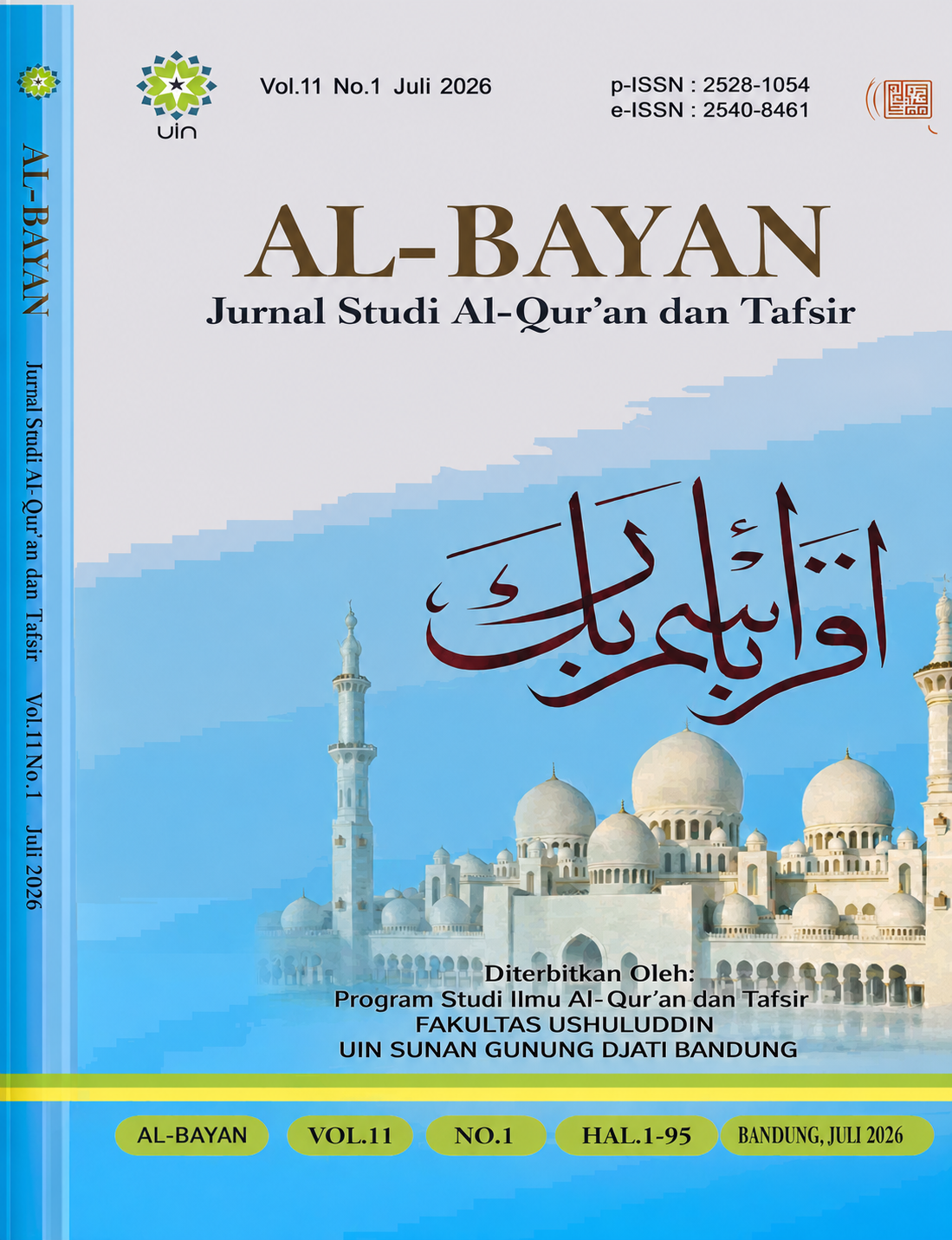
Main Article Content
Abstract
The discourse on decolonizing Qur’ān and tafsīr studies has gained increasing attention following Joseph E. Lumbard’s critique of the dominance of Eurocentric epistemologies in Islamic studies. While this debate has stimulated critical reflection within Western scholarship, its reception and development in Indonesian Qur’ānic studies remain underexamined. This article investigates how the discourse has evolved in Indonesian Islamic universities by focusing on the reception of Western scholarship, the predominance of contextual interpretation, and the position of tafsīr Nusantara within contemporary Qur’ānic studies. This study employs qualitative library research using critical discourse analysis. Drawing on scholarship on decolonization, Western Qur’ānic studies, Indonesian Islamic higher education, and tafsīr Nusantara, it critically evaluates the conceptual assumptions underlying the Indonesian discourse rather than measuring institutional trends. The study finds that the decolonization of Qur’ānic and tafsīr studies in Indonesia remains largely a static discourse. Although Western scholarship has been widely incorporated into academic institutions, it has primarily reinforced the dominance of contextual hermeneutics while leaving the classical Islamic exegetical tradition and tafsīr Nusantara insufficiently integrated as autonomous epistemic resources. The article argues that meaningful decolonization requires not the rejection of Western scholarship but the reconstruction of a genuinely pluralistic epistemology that recognizes classical Islamic scholarship and tafsīr Nusantara as active intellectual traditions. In doing so, it offers a critical framework for advancing decolonization in Indonesian Qur’ānic and tafsīr studies.
Article Details

This work is licensed under a Creative Commons Attribution 4.0 International License.
Authors who publish with this journal agree to the following terms:
- Authors retain copyright and grant the journal right of first publication with the work simultaneously licensed under a Creative Commons Attribution License that allows others to share the work with an acknowledgement of the work's authorship and initial publication in this journal.
- Authors are able to enter into separate, additional contractual arrangements for the non-exclusive distribution of the journal's published version of the work (e.g., post it to an institutional repository or publish it in a book), with an acknowledgement of its initial publication in this journal.
- Authors are permitted and encouraged to post their work online (e.g., in institutional repositories or on their website) prior to and during the submission process, as it can lead to productive exchanges, as well as earlier and greater citation of published work.
References
Alatas, S. H. (1972). The captive mind in development studies. International Social Science Journal, 24(1), 9–25.
Alatas, S. H. (1974). The captive mind and creative development. International Social Science Journal, 26(4), 691–700.
Alatas, S. H. (2000). Intellectual imperialism: Definition, traits and problems. Southeast Asian Journal of Social Science, 28(1), 23–45. ADDIN ZOTERO_BIBL {"uncited":[],"omitted":[],"custom":[]} CSL_BIBLIOGRAPHY
Asad, T. (2009). The Idea of an Anthropology of Islam. Qui Parle, 17.
Azhar, I. (2020). Being Authoritative But No Authority? Muslim Religious Intellectuals in Shaping Indonesian Islam Discourse. In N. Saat, A. N. Burhani, & ISEAS-Yusof Ishak Institute (Eds.), The New Santri: Challenges to Traditional Religious Authority in Indonesia. Institute of Southeast Asian Studies.
Berg, C., & Shaw, M. (2014). Debating Controversial History: A Twenty-first Century Re-appraisal of the Orientalist Debate, Its Key Actors, and Its Future. The International Journal of Learner Diversity and Identities, 20(2), 1–16. https://doi.org/10.18848/2327-0128/CGP/v20i02/48562
Daneshgar, M. (2016). The Study of Qur’ān Interpretation in the Malay-Indonesian World: A Select Bibliography. In M. Daneshgar, P. G. Riddell, & A. Rippin (Eds.), The Qur’ān in Malay-Indonesian World: Context and Interpretation. Routledge.
Daneshgar, M. (2020). Studying the Qur’an in the Muslim Academy (1st ed.). Oxford University Press. https://doi.org/10.1093/oso/9780190067540.001.0001
de Sousa Santos, B. (2014). Epistemologies of the South: Justice against Epistemicide. Routledge.
Donner, F. M. (2019). Reflections on the History and Evolution of Western Study of the Qur’ān, from ca. 1900 to the Present. In M. Sirry (Ed.), New Trends in Qur’anic Studies: Text, Context, and Interpretation. Lockwood Press.
El-Badawi, E. (2014). The Qur’an and the Aramaic Gospel Traditions. Routledge.
Federspiel, H. M. (1994). Popular Indonesian Literature of the Qur’an. Cornell Modern Indonesia Project.
Gusmian, I. (2013). Khazanah Tafsir Indonesia: Dari Hermeneutika hingga Ideologi. LKiS.
Hallaq, W. B. (2018). Restating Orientalism: A Critique of Modern Knowledge. Columbia University Press.
Hitami, M. (2021). Nilai-Nilai Pluralisme dalam Tafsīr Nusantara. Nusantara: Journal for Southeast Asian Islamic Studies, 17(1), 8. https://doi.org/10.24014/nusantara.v17i1.13826
Jeffery, A. (2007). The Foreign Vocabulary in the Qur’an. Brill.
Johns, A. H. (1988). Quranic Exegesis in the Malay World: In Search of a Profile. In A. Rippin (Ed.), Approaches to the History of the Interpretation of the Qur’ān. Clarendon Press.
Johns, A. H. (2005). Qur’ān Exegesis in the Malay-Indonesian World: An Introductory Survey. In A. Saeed (Ed.), Approaches to The Qur’an in Contemporary Indonesia. Oxford University Press.
Kurdi, A. J. (2022, June 16). Polemik Penerimaan Hermeneutika Barat Pada Kesarjanaan Timur (Review Artikel Sahiron Syamsuddin). Studi Tafsir. https://studitafsir.com/2022/06/16/polemik-penerimaan-hermeneutika-barat-pada-kesarjanaan-timur-review-artikel-sahiron-syamsuddin/
Kurdi, A. J. (2024). Tafsȋr Dan Ta‘Wȋl Pada Karya-Karya Tafsir Abad Pertengahan (4-10 H): Konsepsi, Implikasi Metodologis Dan Trajektori [Masters, Institut PTIQ Jakarta]. https://repository.ptiq.ac.id/id/eprint/1483/
Kusmana. (2022). “Maksud Tuhan” dalam Penafsiran Manusia: Dinamika Pembacaan Al-Qur’an Feminis. UIN Syarif Hidayatullah. https://drive.google.com/file/d/1cij6Neha3aLm1h7DqHhngmw2AOFanbBF/view
Lukman, F. (2021a). Menjadi Sejarawan Tafsir: Beberapa Asumsi Metodologis Penelitian Tafsir Indonesia. In M. Ghozali (Ed.), Dialektika Keilmuan Ushuluddin: Epistemologi, Diskursus & Praksis. Q-Media.
Lukman, F. (2021b). Telaah Historiografi Tafsir Indonesia. Suhuf, 14(1), 49–77. https://doi.org/10.22548/shf.v14i1.616
Lukman, F. (2022). The Official Indonesian Qurʾān Translation: The History and Politics of Al-Qur’an dan Terjemahnya (1st ed., Vol. 1). Open Book Publishers. https://doi.org/10.11647/OBP.0289
Lumbard, J. E. B. (2022). Decolonizing Qurʾanic Studies. Religions, 13(2), 176. https://doi.org/10.3390/rel13020176
Lumbard, J. E. B. (2024). Islam and the Challenge of Epistemic Sovereignty. Religions, 15(4), 406. https://doi.org/10.3390/rel15040406
Lumbard, J. E. B. (2025). Islam, coloniality, and the pedagogy of cognitive liberation in higher education. Teaching in Higher Education, 30(6), 1409–1419. https://doi.org/10.1080/13562517.2025.2468974
Luxenberg, C. (2007). The Syro-Aramaic Reading of the Koran: A Contribution to the Decoding of the Language of the Koran. Verlag Hans Schiler.
Manzoor, P. (1987). Method against Truth: Orientalism and Qur’anic Studies. Muslim World Book Review, 7.
Muslim, M. (2000). Mabahits fi al-Tafsir al-Maudhu’i. Dar al-Qalam.
Mustaqim, A. (2019). Argumentasi Keniscayaan Tafsir Maqashidi. UIN Sunan Kalijaga. https://digilib.uin-suka.ac.id/id/eprint/37005/1/Abdul%20Mustaqim__ARGUMENTASI%20KENISCAYAAN%20all.pdf
Nawawi, Abd. M. (2024, July 22). “Memaklumi” Para Apologet Muslim dalam Kajian Al-Qur`an. ibihtafsir.id. https://ibihtafsir.id/2024/07/22/memaklumi-para-apologet-muslim-dalam-kajian-al-quran/
Neuwirth, A. (2007). Orientalism in Oriental Studies? Quranic Studies as a Case in Point. Journal of Qur’anic Studies, 9.
Nurtawab, E. (2018). Jalalayn Pedagogical Practice: Styles of Qur’an and Tafsir Learning in Contemporary Indonesia [Disertasi]. Monash University.
Nurtawab, E. (2020). Qur’anic Readings and Malay Translations in 18th-Century Banten Qur’ans A.51 and W.277. Indonesia and the Malay World, 48(141), 169–189. https://doi.org/10.1080/13639811.2020.1724469
Nuryansah, M., & Haq, M. I. (2022). Konsep Ummatan Wasathan dalam Perspektif Tafsir Nusantara (Tafsir An-Nur, Tafsir Al-Azhar, dan Tafsir Al-Misbah). Al-Dzikra: Jurnal Studi Ilmu al-Qur’an Dan al-Hadits, 16(2), 269–296. https://doi.org/10.24042/al-dzikra.v16i2.13113
Pink, J. (2014). Striving for a New Exegesis of the Qurʾān (S. Schmidtke, Ed.; Vol. 1). Oxford University Press. https://doi.org/10.1093/oxfordhb/9780199696703.013.013
Pink, J. (2019). Muslim Qurʼānic Interpretation Today: Media, Genealogies and Interpretive Communities. Equinox Publishing Limited.
Pink, J. (2020). Classical Qur’anic Hermeneutics. In J. Pink, The Oxford Handbook of Qur’anic Studies (pp. 817–831). Oxford University Press. https://doi.org/10.1093/oxfordhb/9780199698646.013.64
Powers, D. S. (2011). Muhammad Is Not the Father of Any of Your Men. University of Pennsylvania Press.
Qadafy, M. Z. (2022a). Challenging al-Dhahabi’s (1915-1977) Authority in the Historiography of Tafsir: A Clarification of His Salafi Outlook. Islamic Studies Review, 1(2).
Qadafy, M. Z. (2022b, March 29). Review #27 – Melepas Studi Tafsir dari Bayang-Bayang Studi Qur’an (Part 1): Perspektif IQSA. Studi Tafsir. https://studitafsir.com/2022/03/29/melepas-studi-tafsir-dari-bayang-bayang-studi-quran-part-1-perspektif-iqsa/
Qadafy, M. Z. (2022c, July 2). Review #36 Melepas Studi Tafsir dari Bayang-Bayang Studi Qur’an (Part 2): Studi Tafsir Sebagai ‘Titik Temu’ Pendekatan Normatif dan Obyektif. Studi Tafsir. https://studitafsir.com/2022/07/02/melepas-studi-tafsir-dari-bayang-bayang-studi-quran-part-2-studi-tafsir-sebagai-titik-temu-antara-pendekatan-normatif-dan-obyektif/
Qadafy, M. Z. (2023). Menghidupkan yang Mati Suri: Walid Saleh dan Revitalisasi Kajian Sejarah Intelektual Tafsir Klasik. SUHUF, 15(2). https://doi.org/10.22548/shf.v15i2.726
Qadafy, M. Z. (2025, October 5). Kolom #28 Cukup Sudah Membuat Masa Lalu Melayani Masa Depan Asumsi Dasar Studi Tafsir (bagian-1). Studi Tafsir. https://studitafsir.com/2025/10/05/cukup-sudah-membuat-masa-lalu-melayani-masa-depan-asumsi-dasar-studitafsir-bagian-1/
Qadafy, M. Z. & Yunita. (2025). Just a Philomath, not a Polymath: Did the Paradigm of Integration-Interconnection of Sciences Obscure or Illuminate the Study of the Qur’an and Tafsir in Academic Institution? Jurnal Studi Ilmu-Ilmu Al-Qur’an Dan Hadis, 26(1), 53–76. https://doi.org/10.14421/qh.v26i1.5790
Rahman, Y. (2019). Indonesian Muslim Responses to Non-Muslim Approaches to Qur’anic Studies. In M. Sirry (Ed.), New Trends in Qur’anic Studies: Text, Context, and Interpretation. Lockwood Press.
Rahman, Y., & Nurtawab, E. (2024). Western Qur’anic Studies in Indonesian Islamic Universities: Responses, Contestations, and Curriculum Politics. Al-Jami’ah: Journal of Islamic Studies, 62(2), 337–361. https://doi.org/10.14421/ajis.2024.622.337-361
Reynolds, G. S. (2010). The Quran and Its Biblical Subtext. Routledge.
Riddell, P. G. (2002). Literal Translation, Sacred Scripture and Kitab Malay. Studia Islamika, 9(1). https://doi.org/10.15408/sdi.v9i1.672
Riddell, P. G. (2014). Variations on an Exegetical Theme: Tafsīr Foundations in the Malay World. Studia Islamika, 21(2), 259–292. https://doi.org/10.15408/sdi.v21i2.1072
Rippin, A. (2006). Western Scholarship and the Qur’ān. In J. D. McAuliffe (Ed.), Cambridge Companion to the Qur’ān. Cambridge University Press.
Rizvi, S. (2021). Reversing the Gaze? Or Decolonizing the Study of the Qur’an. Method and Theory in the Study of Religion, 33.
Rohmana, J. A. (2024). Qur’an Translation and Reformist daʿwa: Ideology, Literacy, and Modernity in West Java. Journal of Qur’anic Studies, 26(2), 16–48. https://doi.org/10.3366/jqs.2024.0582
Rohmana, J. A. (2025). Terjemahan Al-Qur’an Kaum Reformis: Ideologi, Literasi dan Kemordenan di Jawa Barat. Unipi Press.
Rohmana, J. A. (2026). Kitab Cetak Sunda di Mesir. UI Press.
Sadeghi, B. (2011). The Chronology of the Quran: A Stylometric Research Program. Arabica, 58.
Sadeghi, B., & Bergmann, U. (2010). The Codex of a Companion of the Prophet and the Quran of the Prophet. Arabica, 57.
Ṣadr, M. B. (1989). Al-Tafsir al-Maudhu’i wa al-Falsafah al-Ijtima’iyah fi al-Madrasah al-Qur’aniyah. al-Dar al-’Alamiyah.
Said, E. (1978). Orientalism. Random House.
Saleh, W. (2004). The Formation of the Classical Tafsīr Tradition: The Qurʾān Commentary of al-Thaʿlabī (d. 427/1035). https://doi.org/10.1163/9789047412564
Saleh, W. A. (2020a). Contemporary Tafsīr: The Rise of Scriptural Theology. In W. A. Saleh, The Oxford Handbook of Qur’anic Studies (pp. 692–703). Oxford University Press. https://doi.org/10.1093/oxfordhb/9780199698646.013.56
Saleh, W. A. (2020b). Medieval Exegesis: The Golden Age of Tafsīr. In W. A. Saleh, The Oxford Handbook of Qur’anic Studies (pp. 665–681). Oxford University Press. https://doi.org/10.1093/oxfordhb/9780199698646.013.6
Saleh, W. A. (2022). Periodization in the Sunni Qur’an Commentary Tradition: A Chronological History of a Genre. The Medieval Globe, 8(2).
Sinai, N. (2017). The Qur’an: A Historical-Critical Introduction. Edinburgh University Press.
Sirry, M. (2019). Introduction: Recent Trends in Qur’anic Studies. In M. Sirry (Ed.), New Trends in Qur’anic Studies: Text, Context, and Interpretation. Lockwood Press.
Syamsuddin, S. (2022). Pendekatan Ma’na cum Maghza atas al-Qur’an: Paradigma Prinsip dan Metode Penafsiran. UIN Sunan Kalijaga. https://drive.google.com/file/d/1CxYAvwNQ8rBsI3T1X9hGzr2mHf7rxlLs/view
Wibowo, S. E. (2019). Hermeneutika: Kontroversi Kaum Intelektual Indonesia. IAIN Jember Press.
Wijaya, A. (2021). Menghadirkan Pesan Al-Qur’an yang Bermakna (Dari Epistemologi ke Aksiologi). IAIN Ponorogo. https://id.scribd.com/document/552153571/Aksin-Wijaya-2021-Orasi-pengukuhan-MENGHADIRKAN-PESAN-AL-QURAN
Zadeh, T. (2015). Quranic Studies and the Literary Turn. Journal of the American Oriental Society, 135.