ADDITIONAL MENU
About the Journal
Focus and Scope
Atthulab: Islamic Religion Teaching and Learning Journal is a Journal of Islamic Education in the Faculty of Tarbiyah and Teacher Training at UIN Sunan Gunung Djati Bandung which aims to accommodate Islamic lecturers, researchers and educators in schools / madrasah in publishing the results of their research in PAI learning.
The scope of Atthulab: Islamic Religion Teaching and Learning Journal includes:
- Islamic Religious Education (PAI)
- Teaching and Learning in Islamic Education
- Curriculum Development and Evaluation
- Instructional Design and Learning Innovation
- Educational Technology and Digital Learning
- Teacher Professional Development
- Student Learning Outcomes and Assessment
- Character Education and Moral Development
- Tafsir Tarbawy and Hadith Tarbawy
- Islamic Educational Philosophy and Thought
- Educational Leadership and Management
- Pesantren Education
- Madrasah Education
- Qur’anic Learning and TPQ Education
- Higher Education and Islamic Studies
- Islamic Educational Psychology
- Sociology and Anthropology of Islamic Education
- Educational Policy and Reform
- Multicultural and Inclusive Education
- Science and STEM Education in Islamic Institutions
- Community-Based and Mosque-Based Education
- Islamic Education and Social Transformation
- Comparative and International Islamic Education
- Systematic Literature Reviews in Islamic Education
Peer Review Process
Peer review assists the editor in making editorial decisions and through the editorial communications with the author may also assist the author in improving the paper.
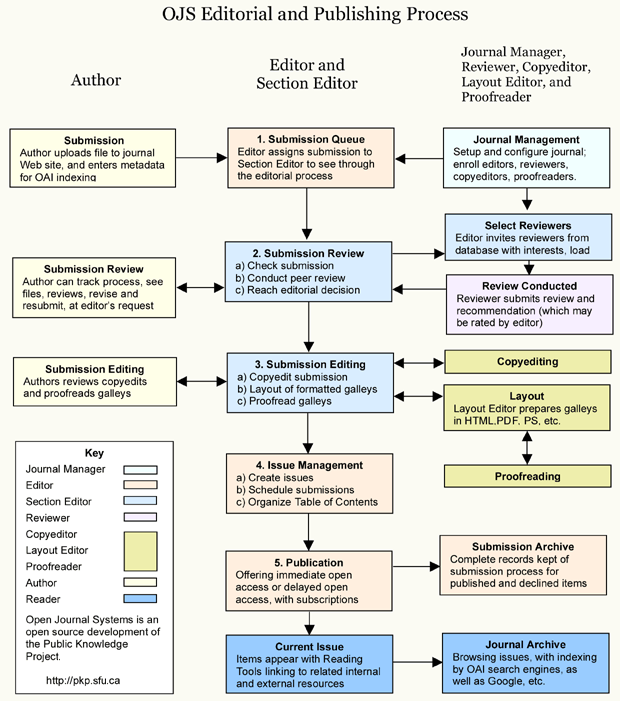
Manuscript articles that submit by online to Atthulab: Islamic Religion Teaching and Learning Journal will be checked by the board of editor regarding scope, in house style, plagiarism. The manuscript that qualifies the focus and scope of Jurnal Pendidikan Islam will be continued to the review process which, at least, will be reviewed by reviewers with double blind commitment. The reviewer is a journal partner from the experts who concern about the field of journal. The editor will send an e-mail to the chosen reviewer about the title and contien of manuscript, and also the invitation to log in to journal website to finish the review process. The reviewer logs in to journal website to approve doing the review, to download the manuscript, to send their comment, and to choose the recommendation. The reviewing process by reviewer is done at least in two weeks. The result will be returned to the author to be followed up. The qualified paper will be published in English.
Promptness
Any selected referee who feels unqualified to review the research reported in a manuscript or knows that its prompt review will be impossible should notify the editor and excuse himself from the review process.
Confidentiality
Any manuscripts received for review must be treated as confidential documents. They must not be shown to or discussed with others except as authorized by the editor.
Standards of Objectivity
Reviews should be conducted objectively. Personal criticism of the author is inappropriate. Referees should express their views clearly with supporting arguments.
Acknowledgment of Sources
Reviewers should identify relevant published work that has not been cited by the authors. Any statement that an observation, derivation, or argument had been previously reported should be accompanied by the relevant citation. A reviewer should also call to the editor's attention any substantial similarity or overlap between the manuscript under consideration and any other published paper of which they have personal knowledge.
Disclosure and Conflict of Interest
Privileged information or ideas obtained through peer review must be kept confidential and not used for personal advantage. Reviewers should not consider manuscripts in which they have conflicts of interest resulting from competitive, collaborative, or other relationships or connections with any of the authors, companies, or institutions connected to the papers.
Open Access Policy
This journal provides immediate open access to its content on the principle that making research freely available to the public supports a greater global exchange of knowledge.
Publication Ethics
Atthulab: Islamic Religion Teaching and Learning Journal (ISSN 2503-5282, E-ISSN 2598-0971) is a peer-reviewed journal published Islamic religious education laboratory Faculty of Tarbiyah and Teacher Training, UIN Sunan Gunung Djati Bandung. This statement clarifies the ethical behavior of all parties involved in the act of posting an article in this journal, including the author, the chief editor, the Editorial Board, the peer-reviewed and the publisher. This statement based on COPE’s Best Practice Guidelines for Journal Editors.
Ethical Guideline for Journal Publication
The publication of an article in Atthulab: Islamic Religion Teaching and Learning Journal is an important building block in the development of a coherent and respected network of knowledge. This is a direct reflection of the quality of the work of the authors and the institutions that support them. Peer-reviewed articles support and embody the scientific method. It is therefore important to agree on standards of expected ethical behavior for all parties involved in the act of publishing: authors, journal editors, peer reviewers, publishers and the public.
Islamic religious education laboratory, Faculty of Tarbiyah and Teacher Training as publisher of Atthulab: Islamic Religion Teaching and Learning Journal takes its duties of guardianship over all stages of publishing exceptionally seriously, and we recognize our ethical and other responsibilities. We are committed to ensuring that advertising, reprint or additional commercial revenue has no impact or influence on editorial decisions. Besides, the Islamic religious education laboratory, UIN Sunan Gunung Djati Bandung, and the Editorial Board will assist in communications with other journals and publishers where this is useful and necessary.
Publication decisions
The editor of the Atthulab: Islamic Religion Teaching and Learning Journal is responsible for deciding which of the articles submitted to the journal should publish. The validation of the work in question and its importance to researchers and readers must always drive such decisions. The editors may be guided by the policies of the journal's editorial board and constrained by such legal requirements as shall then be in force regarding libel, copyright infringement and plagiarism. The editors may confer with other editors or reviewers in making this decision.
Fair play
An editor at any time evaluates manuscripts for their intellectual content without regard to race, gender, sexual orientation, religious belief, ethnic origin, citizenship, or political philosophy of the authors.
Confidentiality
The editor and any editorial staff must not disclose any information about a submitted manuscript to anyone other than the corresponding author, reviewers, potential reviewers, other editorial advisers, and the publisher, as appropriate.
Disclosure and conflicts of interest
Unpublished materials disclosed in a submitted manuscript must not use in an editor's research without the express written consent of the author.
Duties of Reviewers
Contribution to Editorial Decisions
Peer review assists the editor in making editorial decisions and through the editorial communications with the author may also help the author in improving the paper.
Promptness
Any selected referee who feels unqualified to review the research reported in a manuscript or knows that its prompt review will be impossible should notify the editor and excuse himself from the review process.
Confidentiality
Any manuscripts received for review must treat as confidential documents. They must not be shown to or discussed with others except as authorized by the editor.
Standards of Objectivity
Reviews should conduct objectively. Personal criticism of the author is inappropriate. Referees should express their views clearly with supporting arguments.
Acknowledgement of Sources
Reviewers should identify relevant published work that has not been cited by the authors. Any statement that an observation, derivation, or argument reported should accompany by the appropriate citation. A reviewer should also call to the editor's attention any substantial similarity or overlap between the manuscript under consideration and any other published paper of which they have personal knowledge.
Disclosure and Conflict of Interest
Privileged information or ideas obtained through peer review must be kept confidential and not used for personal advantage. Reviewers should not consider manuscripts in which they have conflicts of interest resulting from competitive, collaborative, or other relationships or connections with any of the authors, companies, or institutions connected to the papers.
Duties of Authors
Reporting standards
Authors of reports of original research should present an accurate account of the work performed as well as an objective discussion of its significance. Underlying data should be represented accurately in the paper. A paper should contain sufficient detail and references to permit others to replicate the work. Fraudulent or knowingly inaccurate statements constitute unethical behavior and are unacceptable.
Data Access and Retention
Authors are asked to provide the raw data in connection with a paper for editorial review, and should be prepared to provide public access to such data (consistent with the ALPSP-STM Statement on Data and Databases), if practicable, and should in any event be prepared to retain such data for a reasonable time after publication.
Originality and Plagiarism
The authors should ensure that they have written entirely original actions and if the authors have used the works, or words of others that this has appropriately cited or quoted.
Multiple, Redundant or Concurrent Publication
An author should not, in general, publish manuscripts describing essentially the same research in more than one journal or primary publication. Submitting the same paper concurrently to more than one journal constitutes unethical publishing behavior and is unacceptable.
Acknowledgement of Sources
Proper acknowledgment of the work of others must always be given. Authors should cite publications that have been influential in determining the nature of the reported work.
Authorship of the Paper
Authorship should be limited to those who have made a significant contribution to the conception, design, execution, or interpretation of the reported study. All those who have made significant contributions should be listed as co-authors. Where there are others who have participated in certain substantive aspects of the research project, they should be acknowledged or listed as contributors. The corresponding author should ensure that all appropriate co-authors and no inappropriate co-authors are included on the paper and that all co-authors have seen and approved the final version of the article and have agreed to its submission for publication.
Fundamental errors in published works
When an author discovers a significant error or inaccuracy in his self-published work, it is the author's obligation to immediately notify the editor of the journal or publisher and cooperate with the editor to retract or correct the paper.
Generative AI policies
For reviewers
The use of generative AI and AI-assisted technologies in the journal peer review process
When a researcher is invited to review another researcher’s paper, the manuscript must be treated as a confidential document. Reviewers should not upload a submitted manuscript or any part of it into a generative AI tool as this may violate the authors’ confidentiality and proprietary rights and, where the paper contains personally identifiable information, may breach data privacy rights.
This confidentiality requirement extends to the peer review report, as it may contain confidential information about the manuscript and/or the authors. For this reason, reviewers should not upload their peer review report into an AI tool, even if it is just for the purpose of improving language and readability.
Peer review is at the heart of the scientific ecosystem and Elsevier abides by the highest standards of integrity in this process. Reviewing a scientific manuscript implies responsibilities that can only be attributed to humans. Generative AI or AI-assisted technologies should not be used by reviewers to assist in the scientific review of a paper as the critical thinking and original assessment needed for peer review is outside of the scope of this technology and there is a risk that the technology will generate incorrect, incomplete or biased conclusions about the manuscript. The reviewer is responsible and accountable for the content of the review report.
Elsevier’s AI author policy states that authors are allowed to use generative AI and AI-assisted technologies in the manuscript preparation process before submission, but only with appropriate oversight and disclosure, as per our instructions in Elsevier’s Guide for Authors. Reviewers can find such disclosure at the bottom of the paper in a separate section before the list of references.
Please note that Elsevier owns identity protected AI-assisted technologies which conform to the RELX Responsible AI Principles, such as those used during the screening process to conduct completeness and plagiarism checks and identify suitable reviewers. These in-house or licensed technologies respect author confidentiality. Our programs are subject to rigorous evaluation of bias and are compliant with data privacy and data security requirements.
Elsevier embraces new AI-driven technologies that support reviewers and editors in the editorial process, and we continue to develop and adopt in-house or licensed technologies that respect authors’, reviewers’ and editors’ confidentiality and data privacy rights.
View Elsevier's generative AI reviewer policies for books
For editors
The use of generative AI and AI-assisted technologies in the journal editorial process
A submitted manuscript must be treated as a confidential document. Editors should not upload a submitted manuscript or any part of it into a generative AI tool as this may violate the authors’ confidentiality and proprietary rights and, where the paper contains personally identifiable information, may breach data privacy rights.
This confidentiality requirement extends to all communication about the manuscript including any notification or decision letters as they may contain confidential information about the manuscript and/or the authors. For this reason, editors should not upload their letters into an AI tool, even if it is just for the purpose of improving language and readability.
Peer review is at the heart of the scientific ecosystem and Elsevier abides by the highest standards of integrity in this process. Managing the editorial evaluation of a scientific manuscript implies responsibilities that can only be attributed to humans. Generative AI or AI-assisted technologies should not be used by editors to assist in the evaluation or decision-making process of a manuscript as the critical thinking and original assessment needed for this work is outside of the scope of this technology and there is a risk that the technology will generate incorrect, incomplete or biased conclusions about the manuscript. The editor is responsible and accountable for the editorial process, the final decision and the communication thereof to the authors.
Elsevier’s AI author policy states that authors are allowed to use generative AI and AI-assisted technologies in the manuscript preparation process before submission, but only with appropriate oversight and disclosure, as per our instructions in Elsevier’s Guide for Authors. Editors can find such disclosure at the bottom of the paper in a separate section before the list of references. If an editor suspects that an author or a reviewer has violated our AI policies, they should inform the publisher.
Please note that Elsevier owns identity protected AI-assisted technologies which conform to the RELX Responsible AI Principles, such as those used during the screening process to conduct completeness and plagiarism checks and identify suitable reviewers. These in-house or licensed technologies respect author confidentiality. Our programs are subject to rigorous evaluation of bias and are compliant with data privacy and data security requirements.
Elsevier embraces new AI-driven technologies that support reviewers and editors in the editorial process, and we continue to develop and adopt in-house or licensed technologies that respect authors’, reviewers’ and editors’ confidentiality and data privacy rights.
Publishing System
Plagiarism Checker
To avoid Plagiarism, every submitted manuscript will be screened by Turnitin.
Open Access Policy
This journal provides immediate open access to its content on the principle that making research freely available to the public supports a greater global exchange of knowledge.
Indexing
was indexed in:
Sponsors
Atthulab: Islamic Religion Teaching and Learning Journal is a journal published by the Laboratory of Islamic Education, Faculty of Tarbiyah and Teacher Training UIN Sunan Gunung Djati Bandung in collaboration with Perkumpulan Sarjana Pendidikan Islam Indonesia (PSPII) or Association of Indonesian Islamic Education Scholars based on MoU number: B-016/Jurnal Atthulab /MoU/VII/2019, to facilitate lecturers, researchers and educators of Islamic Religion in schools/madrasas in publishing their research results in the field of PAI learning. This journal is published in 2 editions in one year.
ISSN: 2503-5282 (Print)
ISSN: 2598-0971 (Online)
- Lembaga Profesi Pendidikan Agama Islam: Perkumpulan Sarjana Pendidikan Islam Indonesia
Journal History
Atthulab: Islamic Religion Teaching and Learning Journal published by the Laboratory of Islamic Education, Faculty of Tarbiyah and Teacher Training UIN Sunan Gunung Djati Bandung in collaboration with Perkumpulan Sarjana Pendidikan Islam Indonesia (PSPII) or Association of Indonesian Islamic Education Scholars based on MoU number: B-016/Jurnal Atthulab /MoU/VII/2019, to facilitate lecturers, researchers and educators of Islamic Religion in schools/madrasas in publishing their research results in the field of PAI learning. This journal is published in 2 editions in one year.
ISSN: 2503-5282 (Print)
ISSN: 2598-0971 (Online)