



ADDITIONAL MENU
Archives
-
Atthulab: Islamic Religion Teaching and Learning Journal
Vol. 11 No. 1 (2026)Atthulab Journal Vol. 11 No. 1 (2026) contains 9 papers written by 32 authors from 10 institutions in 3 countries, namely Indonesia (Universitas Pendidikan Indonesia, UIN Sunan Gunung Djati Bandung, Ma’had Aly Hasyim Asy’ari Tebuireng, STAI Pelabuhan Ratu, Universitas Islam Negeri Siber Syekh Nurjati Cirebon, STIS As-Sa’adah Sukasari Sumedang, Universitas Buana Perjuangan Karawang, Universitas Islam Nusantara, and Universitas Muhammadiyah Malang), Malaysia (International Islamic University of Malaysia), and Australia (Queensland University). This edition highlights contemporary developments in Islamic Religious Education, including cognitive assessment, gamification and project-based learning, inquiry-based pedagogy, spiritual resilience, digital ethics, student agency in Quranic recitation assessment, curriculum development, character education, and religious moderation in multicultural communities. One prominent theme is the integration of innovative pedagogical approaches with Islamic values to foster students’ intellectual development, moral character, spiritual resilience, and social responsibility. These studies emphasize the importance of contextual learning strategies, reflective practices, digital ethics, and inclusive education in responding to contemporary educational challenges. Collectively, the contributions seek to strengthen the quality of Islamic education by integrating knowledge, faith, character formation, and religious moderation while preparing learners to participate responsibly in an increasingly digital and pluralistic society.
-
Atthulab: Islamic Religion Teaching and Learning Journal
Vol. 10 No. 2 (2025)Atthulab Journal Vol. 10 No. 2 (2025) contains 9 papers written by 32 authors from 10 institutions in 4 countries, namely Indonesia (UIN Raden Intan Lampung, Universitas Pendidikan Indonesia, UIN Sunan Gunung Djati Bandung, Universitas Negeri Medan, Universitas Muhammadiyah Prof. Dr. Hamka, Universitas Islam Negeri Raden Fatah Palembang, Institut Al Fithrah Surabaya, and Universitas Negeri Surabaya), Australia (Charles Darwin University), Egypt (Al Azhar Cairo University), and Thailand (Walailak University). This edition highlights diverse themes in Islamic education, including cultural harmony and identity formation, teachers’ affective roles, participatory evaluation, character rehabilitation, technology-based Quranic learning, humanistic approaches, local cultural integration, collaborative learning, and the philosophical foundations of Islamic education. One prominent theme is the integration of Islamic values with innovative, contextual, and humanistic pedagogical approaches to strengthen students’ character, agency, and learning engagement. These studies emphasize the importance of combining digital learning media, culturally responsive education, spiritual development, and collaborative teaching strategies to improve the quality of Islamic education while fostering learners who are morally grounded, culturally aware, and socially responsible.
-
Atthulab: Islamic Religion Teaching and Learning Journal
Vol. 10 No. 1 (2025)Atthulab Journal Vol. 10 No. 1 (2025) contains 10 papers written by 33 authors from 13 institutions in 4 countries, namely Indonesia (Universitas Langlangbuana, Universitas Pendidikan Indonesia, UIN Sunan Gunung Djati Bandung, STAI Salahuddin Pasuruan, Universitas Islam Negeri Maulana Malik Ibrahim Malang, Universitas Islam Darussalam Ciamis, IAI Persis Garut, Sunan Kalijaga State Islamic University Yogyakarta, and STAI Sabili Bandung), Australia (The University of Queensland), Pakistan (Superior University Lahore), and Libya (University of Zawia). This edition highlights diverse developments in Islamic education, including curriculum innovation, pedagogical approaches, character education, environmental awareness, and the integration of Islamic values into contemporary educational practices. One prominent theme is the development of holistic and contextual Islamic education that integrates intellectual competence, moral character formation, and social responsibility. These studies emphasize the importance of innovative learning approaches and interdisciplinary perspectives in strengthening educational quality, fostering students' ethical awareness, and preparing learners to respond to contemporary social and educational challenges while maintaining the relevance of Islamic values.
-
Atthulab: Islamic Religion Teaching and Learning Journal
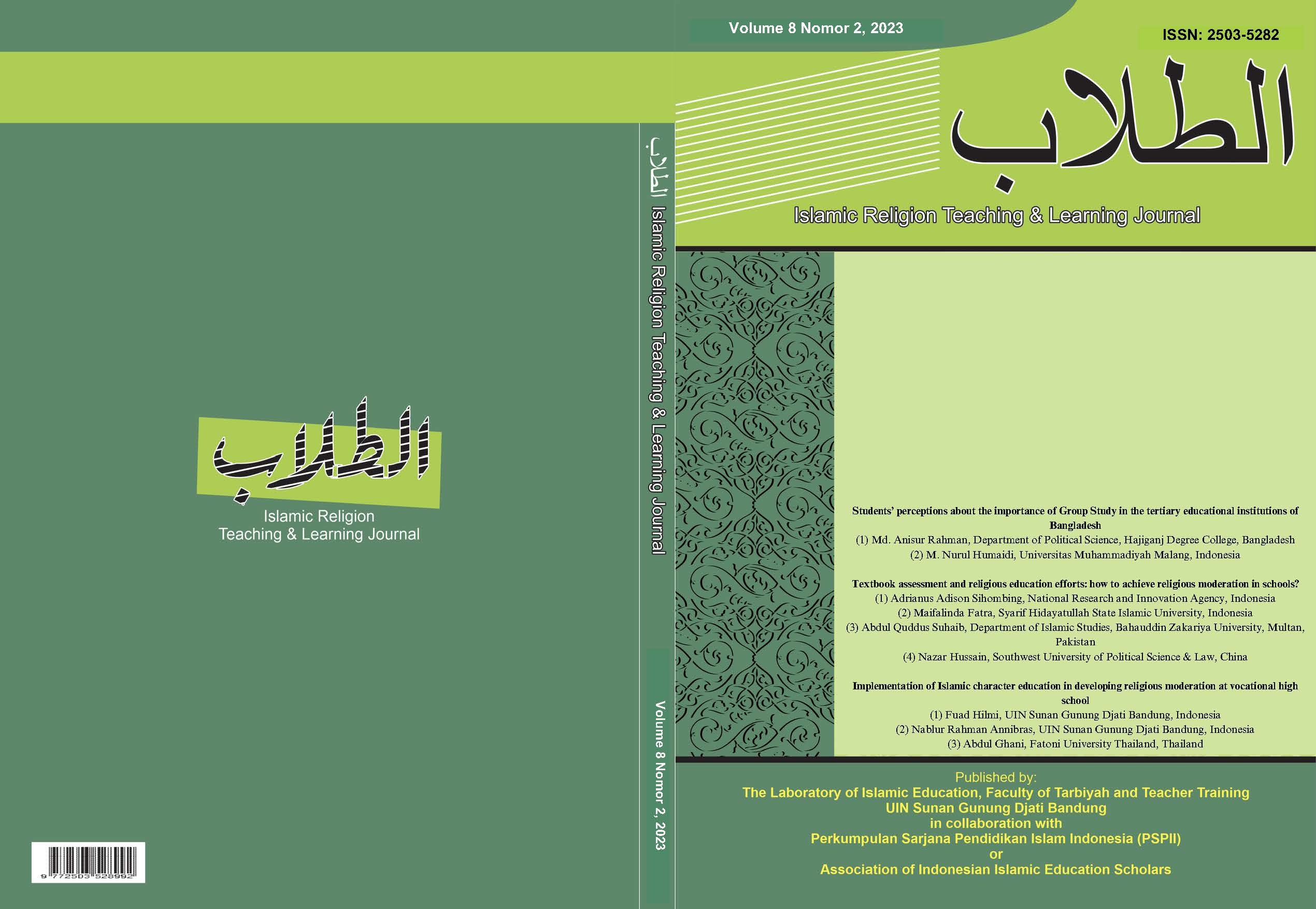
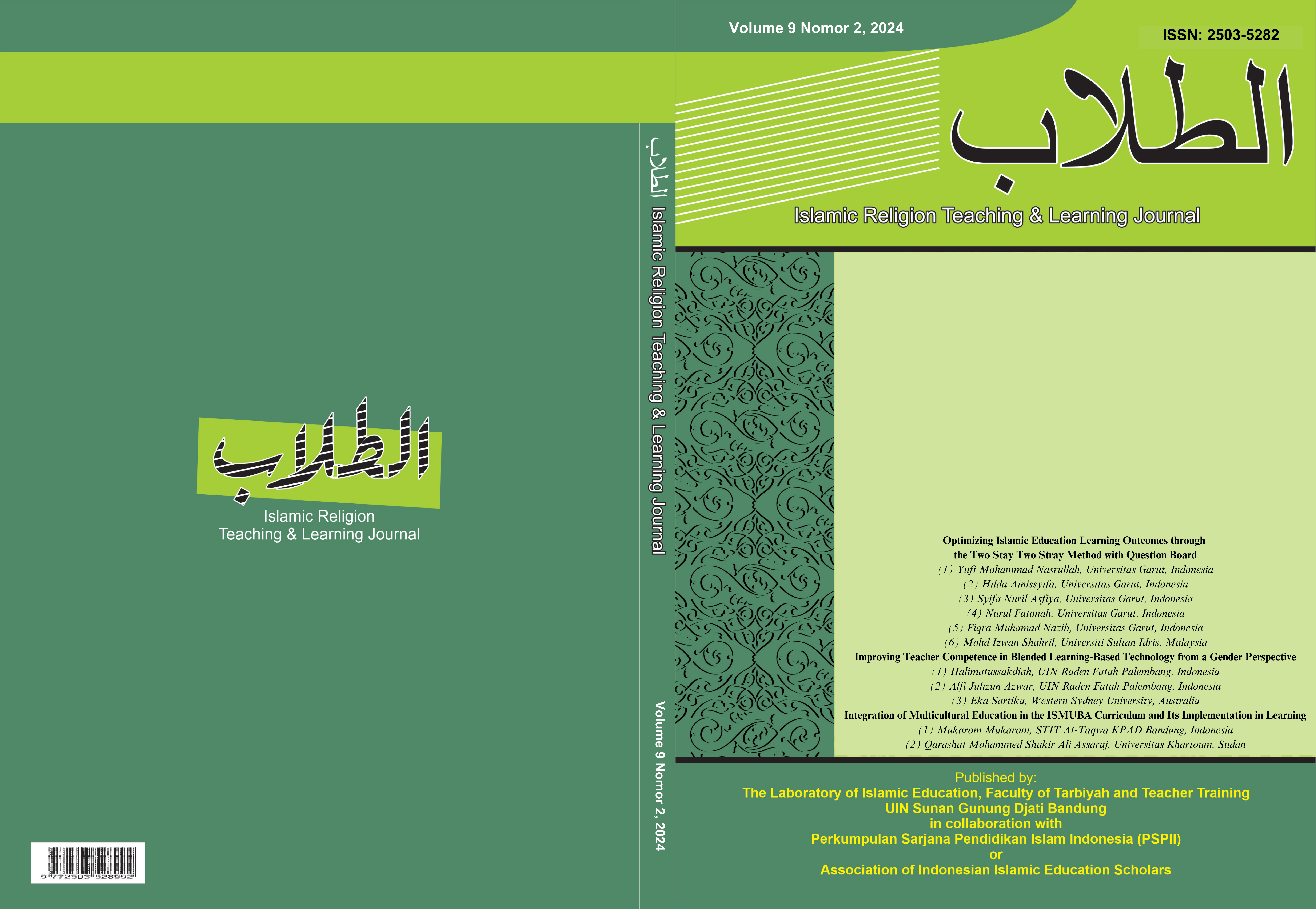
Vol. 9 No. 2 (2024)Atthulab Journal Vol. 9 No. 2 (2024) contains 10 papers written by 27 authors from 10 institutions in 2 countries, namely Indonesia (UIN Sunan Gunung Djati Bandung, Muhammadiyah University of Yogyakarta, Ahmad Dahlan University, University of Lampung, Islamic University of Kalimantan, Semarang State University, State Islamic University of Mataram, Indonesian Education University, Raden Intan State Islamic University of Lampung, Sunan Ampel State Islamic University) and Malaysia (National University of Malaysia). One prominent study discusses the effectiveness of the Two Stay Two Stray method with a question board in significantly improving Islamic Religious Education learning outcomes. This method is proposed to be integrated more widely to advance the quality of teaching and prepare competent prospective teachers with a participatory and fun approach.
-

Atthulab: Islamic Religion Teaching and Learning Journal
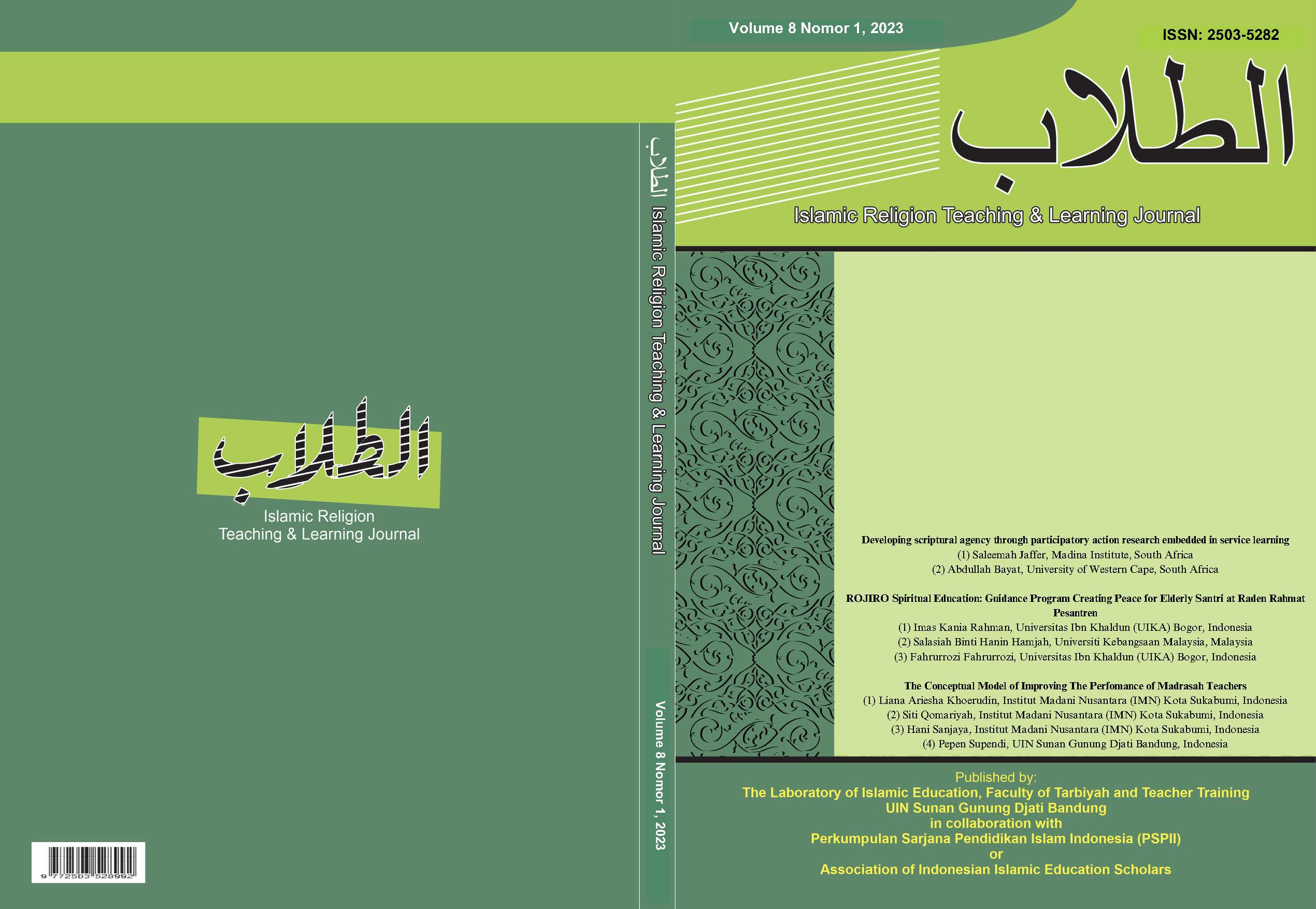
Vol. 9 No. 1 (2024)Atthulab Journal Vol. 9 No. 1 (2024) contains 7 papers written by 22 authors from 9 institutions in 3 countries, namely Indonesia (UIN Sunan Gunung Djati Bandung, Muhammadiyah University of Yogyakarta, Ahmad Dahlan University), Thailand (Thai Islamic School), and Brazil (Universidade Federal do Rio Grande do Sul). This edition highlights innovations in Islamic Religious Education learning, one of which is the development of technology-based interactive media for religious moderation. This research shows that the use of digital media can significantly improve student understanding, so it is proposed to be integrated more widely to improve the quality of teaching with a participatory and fun approach.